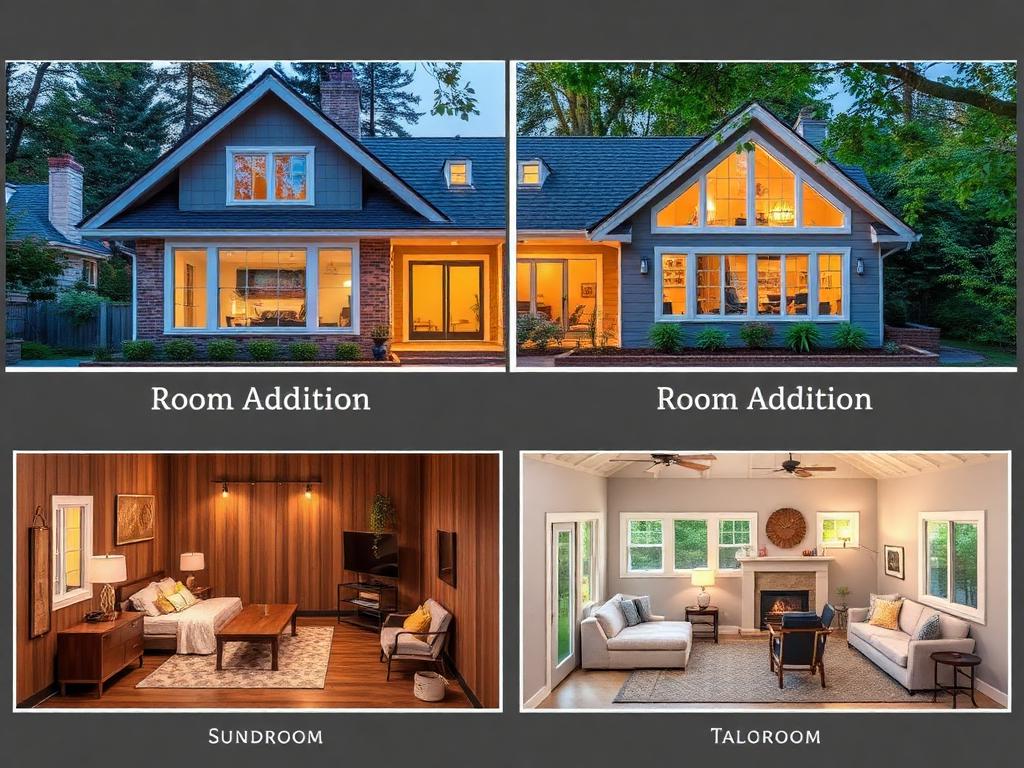
Room additions can be a practical solution for homeowners seeking to expand living space without moving. With various types available, it can be daunting to determine which addition best suits needs and budget. We'll examine three popular types: adding a bedroom, expanding your kitchen, and creating a home office.
Adding a New Bedroom: Pros and Cons
Adding a bedroom can increase home value and provide more space for family or guests. Use our ROI calculator to evaluate potential returns. It offers privacy and separation from other areas, allowing for quieter sleeping arrangements.
However, if not done properly, it can disrupt the home's flow and aesthetic. It can be expensive, especially if requiring significant modifications like plumbing or electrical work.
Expanding Your Kitchen: Benefits and Drawbacks
A larger kitchen provides more room for cooking, meal preparation, storage, and dining. Additional space alleviates stress from cramped kitchens and creates opportunities for new appliances and features. Serving Burbank and nearby cities.
However, costs can be high due to electrical work, plumbing updates, and new appliances. Renovations are time-consuming and may affect adjacent rooms.
Creating a Home Office: Advantages and Disadvantages
A home office boosts productivity and work-life balance, eliminates daily commutes, and provides flexibility in working hours. Use our project planner to design your ideal workspace.
However, it requires significant investment in space, furniture, equipment, and technology. It can be challenging to separate work from personal life when working from home.
Choose Your Room Addition
Ready to add a room to your home? Contact New Dawn Construction and Remodeling for guidance on choosing and building the perfect addition.
How to Choose the Right Type of Room Addition for Your Home
A 6-step guide to evaluating and selecting the best room addition type. Learn to assess bedroom additions, kitchen expansions, home offices, compare costs and ROI, evaluate integration, and select the addition that fits your needs.
- Evaluate Adding a Bedroom Addition Assess whether bedroom addition meets your family’s needs. Bedroom additions increase home value, provide privacy for growing families or guests, and add functional square footage. Consider placement—above garage, extending first floor, or converting existing space. Factor in costs for foundation, framing, electrical, plumbing, HVAC extension, and finishing. Bedroom additions typically cost $80,000-$150,000 depending on size and location.
- Consider Expanding Your Kitchen Evaluate benefits of kitchen expansion for your lifestyle. Larger kitchens provide more cooking space, better storage, room for dining areas, and opportunities for islands or breakfast nooks. Kitchen expansions can bump out into yards, extend into adjacent rooms, or go vertical with vaulted ceilings. Consider costs for structural changes, new appliances, expanded plumbing and electrical, and high-end finishes. Kitchen additions typically range $50,000-$120,000.
- Assess Creating a Dedicated Home Office Determine if home office addition supports your work-from-home needs. Dedicated office space provides quiet workspace separate from family activities, professional environment for video calls, custom built-ins for organization, and potential tax deductions. Consider locations like above garage, backyard ADU, or converted space. Home office additions typically cost $30,000-$80,000 depending on scope and location.
- Compare Costs and ROI for Each Type Research return on investment for each addition type. Bedroom additions typically return 50-60% of investment and appeal to growing families. Kitchen expansions return 60-70% and attract buyers. Home offices return 40-50% but provide immediate lifestyle benefits. Use ROI calculator to evaluate which addition provides best financial return for your situation and market.
- Evaluate Integration with Existing Home Assess how each addition type integrates with your existing home’s architecture, floor plan, and flow. Consider structural requirements, how addition affects adjacent rooms, matching exterior materials and rooflines, utility access and extension needs, and impact on natural light and traffic patterns. Proper integration ensures addition feels like original part of home rather than awkward afterthought.
- Select the Addition Type That Fits Your Needs Make final decision based on your priorities, budget, lifestyle needs, and long-term goals. Consult with experienced contractors to understand feasibility, timing, and true costs. Consider phased approach if budget is limited. Choose addition type that provides greatest benefit to your daily life while protecting your investment. Work with licensed professionals to plan and execute your chosen room addition successfully.