Timeless or Trendy? How to Make Smarter Kitchen Remodeling Decisions in Los Angeles
You save a kitchen photo because one detail grabs you immediately: the sculptural hood, the slab backsplash, the moody cabinets, the extra-long island. Then the excitement slows down just enough for the real questions to enter. Will that hood actually vent properly in an older Los Angeles house? Does that island improve the room, or eat up circulation and storage? Is moving the sink under a new window a smart upgrade, or the start of permits, plumbing moves, and expensive scope creep that has very little to do with daily life?
We walk homeowners through this tension all the time. The mistake is not liking trend-forward design. The mistake is treating every kitchen decision as if it carries the same long-term weight. In reality, some choices are easy to refresh later, while others become expensive commitments that shape how the kitchen works for years.
Plan your kitchen around what lasts
If you are weighing layout changes, ventilation, lighting, or plumbing moves, New Dawn Construction can help you sort timeless upgrades from costly trend-driven decisions before plans are finalized.
That is why our approach to kitchen remodeling in Los Angeles is built around a low-regret framework. The decisions that are hard to redo later should age well first. The decisions that are easier to swap can carry more personality. When homeowners separate those two categories early, the kitchen has a much better chance of feeling current, functional, and valuable long after the reveal photos stop being new.
When people hear “timeless,” they often picture a safe kitchen with no character. We do not see it that way. A kitchen ages well when its core decisions keep working: the layout supports movement, the storage makes sense, the lighting helps real tasks, the ventilation actually clears heat and cooking odors, and the finishes do not create unnecessary maintenance headaches.
That definition matters because a kitchen can look fashionable and still disappoint quickly. We have seen beautiful designs underperform because the pantry planning was shallow, the hood was undersized, the outlets were poorly placed, or the island became an obstacle instead of an asset. Those are the kinds of regrets that linger because fixing them usually means opening walls, reworking cabinetry, or paying twice for labor.
So when we talk about timeless choices, we are really talking about durable performance. Good proportions. Strong workflow. Storage that matches real habits. Lighting that works at 6:30 on a weekday, not just at golden hour. Materials and details that can support years of cooking, cleanup, guests, clutter, and changing tastes.
The decisions that deserve the most discipline
If a choice is expensive, structural, tied to utilities, or painful to undo, that is where we advise the most restraint. This is the part of the remodel where trend-chasing usually costs the most later. A dramatic idea may still be right, but it needs to earn its place by working hard in the room, not just by standing out in a photo.
In practice, the most important timeless decisions usually include the parts of the kitchen that shape function every day:
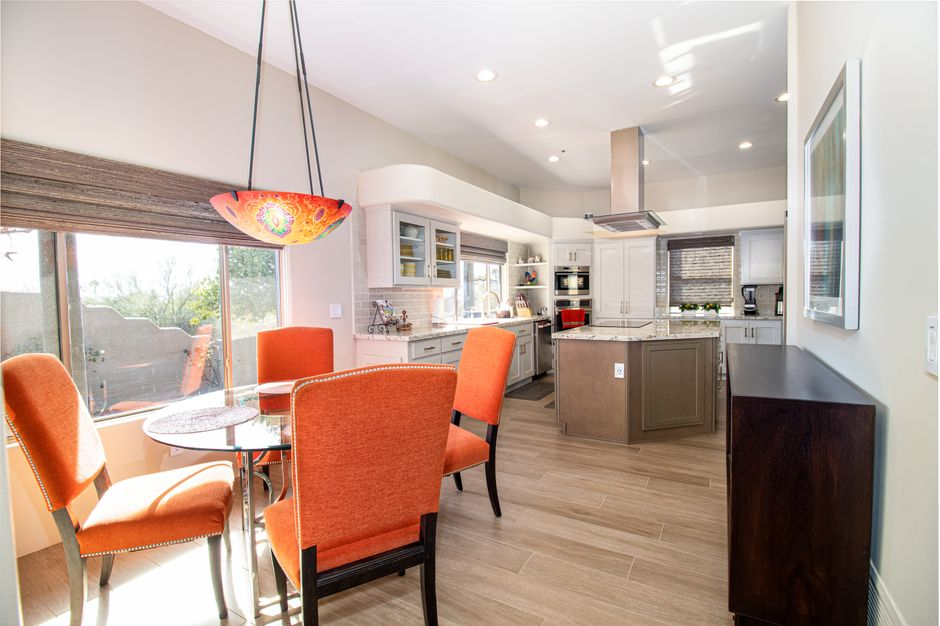
- Layout and circulation: clear paths, workable prep zones, and enough room to open appliances and move around people.
- Cabinetry structure: box quality, door proportions, drawer-heavy storage, and smart interior organization.
- Lighting infrastructure: layered ambient, task, and accent lighting with switches and placements that fit how the kitchen is actually used.
- Ventilation: a hood and ducting strategy that fits the cooking style and the house, not just the look.
- Storage planning: pantry capacity, tray storage, trash placement, small-appliance management, and everyday access.
- Appliance placement: landing space, refrigerator swing, cleanup flow, and realistic relationships between sink, cooking, and prep.
Cabinetry is a good example. A very specific door profile or hyper-trendy finish can date a kitchen faster than most homeowners expect, but the deeper issue is often how the cabinetry functions. We would rather see a kitchen with thoughtful drawer storage, full-height utility where it helps, and fewer dead corners than a kitchen that chases a look while wasting the most expensive square footage in the room.
The same goes for lighting. Decorative fixtures get attention, but the hidden plan matters more. Under-cabinet lighting, can placement, dimming, and task light over prep areas are what make the kitchen feel easy to live in. If the infrastructure is weak, swapping pendants later will not solve the real problem.
Where personality is safer to express
The reassuring part of this framework is that it does not ask you to build a generic kitchen. It simply asks you to place personality where it is easier and less expensive to evolve. Once the permanent decisions are solid, there is plenty of room to make the space feel distinctive.
We often encourage homeowners to be more expressive with elements like hardware, pendant lighting, counter stools, accent paint, open-shelf styling, and selected decorative tile or stone applications that do not force the whole kitchen into one moment of design fashion. These choices can shape the mood of the room without locking the project into a decision that becomes painful to reverse.
That also means a trend is not automatically a bad idea. The question is whether it is being used as a layer or as a commitment. A bold light fixture can be a layer. A highly specific cabinet layout that sacrifices usable storage for the sake of symmetry is a commitment. A rich color on stools or décor is a layer. A fragile, high-maintenance surface installed across every major work zone is a commitment.
In other words, style is safest when the kitchen can survive a change in taste without requiring demolition. That is how a kitchen can feel current now without feeling trapped later.
Why Los Angeles changes the equation
In Los Angeles, timeless versus trendy is not only a design conversation. It is also a buildability conversation. Many homes across LA County come with older electrical systems, aging plumbing, uneven walls, previous remodel layers, and structural realities that do not show up in inspiration photos. A decision that looks simple on a screen can become far more complex once walls open up.
That is why we urge homeowners to treat wall removals, plumbing relocations, new windows, appliance upgrades, and major venting changes as scope decisions before they are style decisions. A new induction range may be the right choice, but the panel has to support it. A dramatic hood may be worth it, but the duct path has to make sense. A sink move may improve the room, but it has to justify the cost, coordination, and disruption.
Permits matter here too. In LA, choices that affect structure, mechanical systems, electrical loads, or openings can ripple into plan review and field coordination in ways homeowners do not always expect. That does not mean avoiding ambitious remodels. It means understanding that the smartest kitchen is the one where design intent and construction reality are aligned early.
This is one reason we believe older LA homes benefit from a contractor-led planning process instead of an inspiration-led one. Buildability is part of good design. A kitchen that looks timeless but hides weak ventilation, compromised storage, or underplanned utility work is not truly timeless at all.
What will still matter ten years from now
Trend cycles move fast, but daily life moves slower and more honestly. The kitchen that feels right over time is usually the one that fits real routines: where groceries land, where clutter builds, who cooks, who cleans, where people gather, and how the room feels when several things are happening at once.
For some households, timeless means better entertaining flow and a kitchen that can absorb guests without turning into a traffic jam. For others, it means easier cleanup, lower-maintenance surfaces, and less visual noise. For long-term homeowners, it may also mean thinking ahead about aging in place: wider clearances, easier-to-reach storage, more drawers instead of deep base cabinets, and lighting that reduces strain rather than creating shadows.
Resale matters too, but we do not think resale should force every kitchen into a bland formula. The better question is whether your personal choices are layered onto a broadly functional foundation. Buyers notice workflow, storage, light, and upkeep just as much as color and style. A kitchen with strong fundamentals tends to read as more expensive, more livable, and more adaptable even when it has a distinct point of view.
That is the balance we aim for: personal enough to feel like home, disciplined enough to keep its value and usefulness over time.
Regret points worth revisiting before you finalize the plan
Before drawings and selections are locked, we like to pressure-test the kitchen against a short list of common regret triggers. This is where small hesitations can save major rework later.
- An oversized island that weakens circulation. Bigger is not better if appliance doors clash, stools choke walkways, or prep space becomes awkward.
- A ventilation plan driven by appearance. A hood should perform in the actual house, with a realistic duct route and enough power for how the kitchen will be used.
- Too little drawer storage. Deep cabinets alone often create bending, stacking, and clutter problems that homeowners regret quickly.
- Pretty lighting without task lighting. If prep zones, sink areas, and cleanup areas are dim, the kitchen will feel older and less functional fast.
- Moving plumbing or windows without a clear payoff. Sometimes it is worth it. Sometimes it is expensive churn disguised as design refinement.
- High-maintenance materials in high-use zones. What feels luxurious on day one can become frustrating if it shows every mark or requires constant care.
Questions we hear during kitchen planning
Does timeless always mean a white kitchen?
No. White can be timeless, but timeless is not a color formula. We focus more on proportion, function, material quality, lighting, and the way the room supports real use. A kitchen can use wood tones, deeper colors, or contrast and still age well if the permanent decisions are disciplined.
Can I use trends without creating regret?
Yes, and that is usually the best approach. We like using trends as accents or layers rather than as the entire structural identity of the kitchen. If a detail can be updated later without opening walls or replacing most of the cabinetry, it is usually a safer place to experiment.
When is moving plumbing actually worth it?
When it meaningfully improves workflow, sightlines, storage, or the overall usefulness of the room enough to justify the added complexity. In Los Angeles homes, plumbing moves can trigger a bigger chain of work than expected, so we like to test whether the improvement is transformational or just visually appealing on paper.
How do I plan for resale without losing personality?
Start with a strong functional foundation that most future owners will appreciate: good storage, sensible circulation, durable surfaces, effective lighting, and ventilation that performs. Then bring in personality through elements that give the room character without making the most expensive parts of the remodel feel niche or hard to live with.
We use this framework because kitchen decisions should survive more than one design cycle. Inspiration matters, but it is only the starting point. The kitchens that age best in Los Angeles are the ones where style is filtered through buildability, maintenance, workflow, and long-term life in the home. That is exactly the kind of judgment we bring to every remodeling conversation at New Dawn Construction, so homeowners can move forward with a kitchen that feels personal now and still makes sense years from now.
Note on approach: trend reports and design forecasts can be useful for spotting direction, but we treat them as signals rather than instructions. Final decisions should be filtered through real construction planning, local LA conditions, and how the kitchen will actually be used over time.
Ready to plan a smarter kitchen remodel in Los Angeles?
Work with a contractor-led team that balances design goals with buildability, storage, lighting, ventilation, and long-term value. New Dawn Construction helps LA homeowners make confident remodeling decisions with fewer regrets later.