
The first cool rain hits, and suddenly the house starts telling the truth. One bedroom feels noticeably draftier than it did in October. A bathroom mirror stays fogged long after the shower ends. Condensation gathers at a window edge. Somewhere near a closet or hallway corner, a faint musty smell appears that no one noticed in summer. In Los Angeles, that shift is often the moment homeowners realize a remodel should not start with finishes alone. It should start with the hidden weak points the weather just exposed.
When we help clients plan a complete home remodel before winter, we usually bring the conversation back to one practical question: what will make this house feel drier, more comfortable, and more durable once the weather turns cooler and wetter? That framing keeps budget focused on the parts of the home that matter most now, especially in older LA houses where patched repairs, insulation gaps, tired ventilation, and aging openings can quietly undermine comfort year after year.
If budget discipline matters—and it usually does—the best first move is to separate high-payoff performance work from upgrades that are nice but not urgent. During a complete home remodel, we generally treat these as the priorities that deserve early attention because they are harder or more expensive to revisit later.
- Tackle now during the remodel: insulation and air sealing, bathroom and whole-home ventilation, waterproofing in wet areas, targeted window and door corrections, and selective exterior drainage or envelope fixes where failure is showing up.
- Often safe to evaluate more selectively: full-house window replacement when only a few openings are failing, trend-driven finish upgrades, broad smart-home add-ons, and premium features that do little for moisture control or winter comfort.
That does not mean every home needs every upgrade. It means the work hidden behind walls, ceilings, showers, tubs, and exterior transitions usually deserves priority over cosmetic choices that can wait.
Why older Los Angeles homes often feel worse in winter than owners expect
LA does not have harsh winter in the way colder regions do, which is exactly why many homes get away with underperforming for a long time. A house can seem mostly fine through warm months, then reveal its weaknesses as soon as nights cool down and rain starts pushing against old openings, rooflines, and exterior walls.
We see the same patterns often: homes built in different eras with uneven upgrades, bathrooms with weak exhaust, walls with little or no effective insulation, doors that leak air at the perimeter, and windows that may not need wholesale replacement but clearly need targeted attention. In many older properties, previous work solved a surface problem without solving the system behind it. A fresh-looking bathroom may still trap moisture. A remodeled kitchen may still sit next to poorly insulated exterior walls. A patched exterior may still direct water toward a vulnerable transition.
This is why a complete home remodel creates such an important opportunity. Once walls are open and multiple rooms are already in play, we can connect scattered symptoms into one coordinated plan instead of fixing the same house in fragments.
1. Start with insulation and air sealing before the finishes hide everything again
Why it matters
If a room never quite warms up, if certain corners feel chilly, or if you notice drafts near windows, doors, or exterior-facing walls, insulation and air leakage are often at the center of it. In LA homes, winter comfort problems are frequently less about extreme cold and more about uneven interior conditions. A house that leaks air or lacks proper insulation can feel damp, drafty, and inconsistent even in relatively mild weather.
What to address now
During a complete remodel, this is one of the smartest categories to bundle while walls and ceilings are already open. We look at exterior wall cavities where accessible, attic transitions, penetrations around plumbing and electrical runs, and connections around remodeled kitchens, bathrooms, and additions. Air sealing matters as much as insulation itself. Without it, warmed interior air escapes and cooler damp air finds its way in.
Where older LA homes get caught
Many older Los Angeles homes were built before current expectations around thermal performance, and some have been updated piece by piece over decades. That creates gaps: one room improved, the next untouched; one wall insulated, another not; one renovation done beautifully at the finish level but with little behind-the-wall correction.
Budget note
This is exactly the kind of low-regret work that makes more sense during a complete home remodel than after. Once drywall, cabinetry, tile, and trim are back in place, correcting the same issues usually costs more and disrupts more.
2. Fix ventilation where moisture actually builds up
Why it matters
Winter moisture problems often show up first in bathrooms, laundry areas, and kitchens. A mirror that stays foggy, paint that struggles near the ceiling, stale air that lingers, or a bathroom that never seems to dry out are all signs that ventilation may be underperforming. Moisture that hangs around does not just feel unpleasant. It increases the risk of hidden damage, odors, and mold-friendly conditions.
What to address now
In a full remodel, ventilation should be treated as part of how the house lives, not as a minor accessory. Bathrooms need exhaust that is properly sized and correctly ducted. Kitchens need real ventilation planning, especially if the remodel changes layout or cooking equipment. In some homes, we also look at how tighter construction, better air sealing, and room reconfiguration affect overall airflow so the house stays comfortable after improvements are made.
Where older LA homes get caught
Dated bathrooms are a common trouble spot. We often see fans that are noisy, weak, poorly vented, or barely used because they do not work well enough to matter. In winter, those shortcomings become more obvious because moisture clears more slowly and cooler surfaces are more likely to collect condensation.
Budget note
Ventilation is not glamorous, but it earns its place quickly. If a bathroom or kitchen is already part of the remodel scope, upgrading the exhaust and ducting now is usually far smarter than reopening finishes later to solve a comfort problem that was already visible.
3. Treat bathrooms and other wet areas like moisture-control systems, not just design projects
Why it matters
A beautiful shower, new vanity, and premium tile will not protect a home if waterproofing details are weak behind the surface. In winter, the consequences of poor moisture management can become more noticeable: damp smells, slow-drying surfaces, recurring caulk failure, or subtle staining that suggests water is getting where it should not.
What to address now
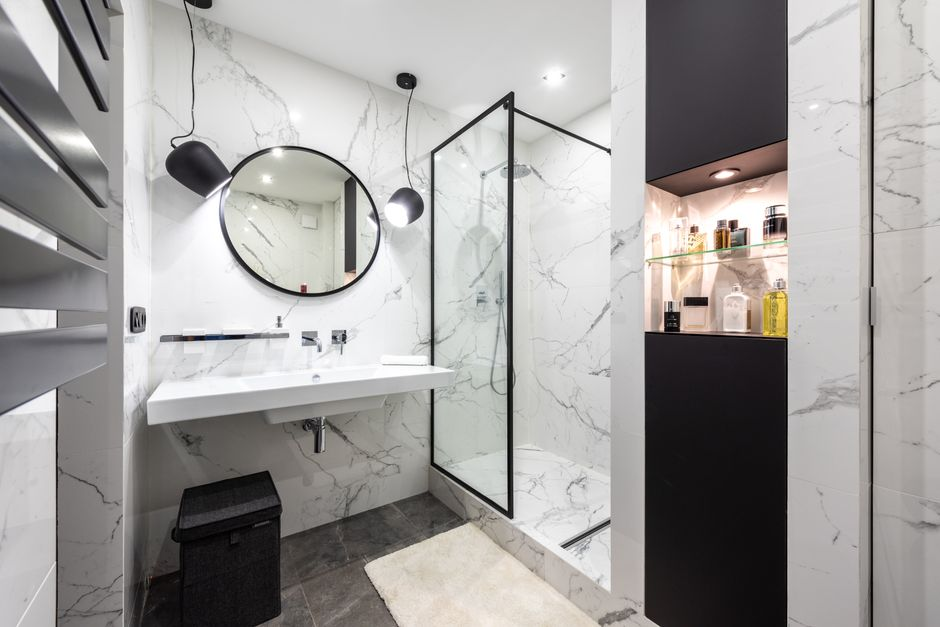
When bathrooms, laundry areas, or kitchens are included in a complete home remodel, we prioritize the layers people do not see once the project is done. That includes shower waterproofing assemblies, tub surrounds, transitions at floors and walls, plumbing updates where needed, and the relationship between moisture-producing rooms and proper ventilation. If a home has had small leaks, patched repairs, or long-term dampness, this is the moment to investigate rather than simply cover over symptoms.
Where older LA homes get caught
Many older homes have had repeated cosmetic updates without full moisture-control correction. The room can look improved while vulnerable areas behind tile, around tubs, under flooring, or at plumbing penetrations continue aging quietly. Cooler, wetter weather tends to make those weak points harder to ignore.
Budget note
This category deserves priority over luxury finish decisions if the two are competing for budget. High-end materials are only as durable as the waterproofing and detailing beneath them.
4. Be selective with windows and doors, but do not ignore the ones that are clearly failing
Why it matters
Windows and doors are emotional remodel decisions because they affect curb appeal, light, sound, and comfort all at once. But for winter-readiness in Los Angeles, the smartest approach is rarely blanket replacement without diagnosis. The goal is to correct real failure points: drafts, condensation, water intrusion, deteriorated frames, poor operation, and weak transitions at the surrounding wall.
What to address now
If openings are visibly leaking air or moisture, if frames are deteriorating, or if the remodel already involves exterior wall work, it often makes sense to correct those areas as part of the larger scope. We also pay close attention to flashing, trim transitions, and surrounding wall conditions, because a new unit alone does not solve a poorly detailed opening.
Where older LA homes get caught
In mixed-age remodels, some windows may be acceptable while others are the clear source of winter discomfort. That is why a selective strategy builds trust. Not every home needs every opening replaced. But the ones producing drafts, condensation, or water-related signs should not be left behind just because window replacement can become an all-or-nothing conversation elsewhere.
Budget note
Targeted correction often beats automatic full-house replacement, especially when other behind-the-wall priorities need funding more urgently.
5. Look beyond the interior when rain is revealing exterior weak points
Why it matters
Sometimes the symptom inside the house starts outside it. A stain near a ceiling line, moisture near a door, persistent dampness at one wall, or recurring mustiness may trace back to drainage, flashing, siding transitions, roof edges, or other envelope conditions that are allowing water to move where it should not.
What to address now
During a complete home remodel, especially one involving exterior openings or wet rooms on perimeter walls, it is worth evaluating the surrounding envelope conditions instead of treating the interior symptom alone. Selective drainage improvements, flashing corrections, threshold detailing, and localized envelope repair can protect the remodel work you are investing in.
Where older LA homes get caught
Los Angeles homes often carry a long history of piecemeal maintenance. One repair may have addressed visible damage without resolving how rainwater was being directed in the first place. Winter is when that history tends to show itself.
Budget note
This is another area where selective action matters. We are not talking about inventing major exterior work where none is needed. We are talking about correcting clear vulnerabilities so interior upgrades are not built over preventable risk.
6. Coordinate the supporting systems while the house is open
Why it matters
A complete home remodel works best when connected systems are planned together. If bathrooms are being rebuilt, kitchens are changing, walls are open, and comfort issues are already obvious, this is the moment to evaluate the electrical, plumbing, ducting, and layout decisions that support winter performance and everyday livability.
What to address now
That may mean rethinking duct runs that do not serve rooms well, updating plumbing in vulnerable wet areas, aligning new exhaust with code and practical use, or coordinating electrical improvements to support new appliances and ventilation equipment. In some homes, improving comfort is not one isolated fix. It comes from several moderate corrections made at the same time, in the right order.
Where older LA homes get caught
Older properties often have systems layered across generations of work. Once finishes come off, we can see where earlier remodels stopped short or where one update created tension with another. Solving that during a whole-home project is far easier than discovering it room by room over the next five years.
Budget note
Coordination is where a full-service remodel delivers real value. It reduces rework, avoids competing trades undoing each other’s progress, and turns separate comfort complaints into one coherent scope.
What to postpone, or at least approach more selectively
Not every appealing upgrade deserves a front-row seat in a winter-focused complete home remodel. We usually advise homeowners to be careful about letting broad wish-list items outrun the core performance work that will actually change how the house feels this season.
If the choice is between hidden durability work and a trend-forward finish decision, the hidden work usually wins. If the choice is between targeted opening corrections and replacing every window regardless of condition, selective tends to be smarter. If the choice is between moisture-control improvements and gadgets that sound efficient on paper but do little for drafts or dampness, comfort and durability should come first.
This is not about stripping the remodel of personality. It is about sequencing. Design matters. Beautiful spaces matter. But in an older Los Angeles home heading into cooler, wetter weather, low-regret performance upgrades should usually be secured before the budget gets absorbed by features that do not solve the underlying problem.
How to plan the work so one remodel solves connected problems
The biggest mistake we see is treating winter symptoms as separate room issues when they are really part of one house-wide pattern. The drafty bedroom, damp bathroom, condensating window, and stale hallway may all connect to the same combination of insulation gaps, weak ventilation, aging openings, and incomplete past repairs.
That is why we scope kitchens, bathrooms, exterior openings, and behind-the-wall systems together whenever the home and budget support it. In practical terms, that means diagnosing the house before finish selections drive the entire conversation. It means understanding what is happening at wet walls, exterior walls, duct paths, and transition points before tile, cabinets, and trim lock everything back in. It also means coordinating permits and inspections appropriately when ventilation, structural changes, plumbing, electrical, or opening modifications are part of the job.
For Los Angeles homeowners, this planning step matters as much as the construction itself. Mild climates can hide underperformance for a long time, so the remodel should be the moment the home becomes more coherent—not just more updated.
The next step should be a whole-home assessment, not a room-by-room guess
If your house starts feeling drafty, damp, or uneven every time cooler weather arrives, that is useful information. It tells us where to look first. The smartest next move is to evaluate those symptoms as part of a complete home remodel plan that connects comfort, moisture control, durability, and design instead of treating each complaint as a separate patch job.
At New Dawn Construction, we approach that process as a coordinated whole-home conversation. We help Los Angeles homeowners sort what needs to happen now, what can wait, and what becomes most cost-effective while walls, wet areas, and key transitions are already open. The result is not just a prettier house for winter. It is a home that feels better to live in and is better prepared for the seasons ahead.
FAQ
Is winter a bad time to start a complete home remodel in Los Angeles?
Not necessarily. In many cases, cooler weather makes comfort and moisture issues easier to identify, which can improve planning. The key is starting with a clear scope and realistic sequencing, especially if permits, exterior work, or major system updates are involved.
Do I need to replace every window if I feel drafts?
No. Drafts can come from selective failing openings, poor sealing, or surrounding wall issues. A complete assessment usually tells us whether targeted correction is enough or whether broader replacement makes sense.
What should I always bundle while walls are open?
Insulation access, air sealing opportunities, ventilation improvements, wet-area waterproofing, and any needed plumbing, electrical, or ducting corrections are usually worth serious review while finishes are removed.
Can I live in the house during a complete remodel?
Sometimes, but it depends on scope. If multiple bathrooms, the kitchen, major systems, or large portions of the home are affected, temporary relocation may be the more practical and less stressful option. We help clients weigh that early so there are fewer surprises.
How do I know whether my winter problems are cosmetic or structural?
Symptoms like condensation, recurring musty smells, chronic dampness, persistent drafts, or moisture-prone bathrooms usually point beyond cosmetics. They do not always signal a major structural issue, but they do justify a closer look at the systems and details behind the finishes.