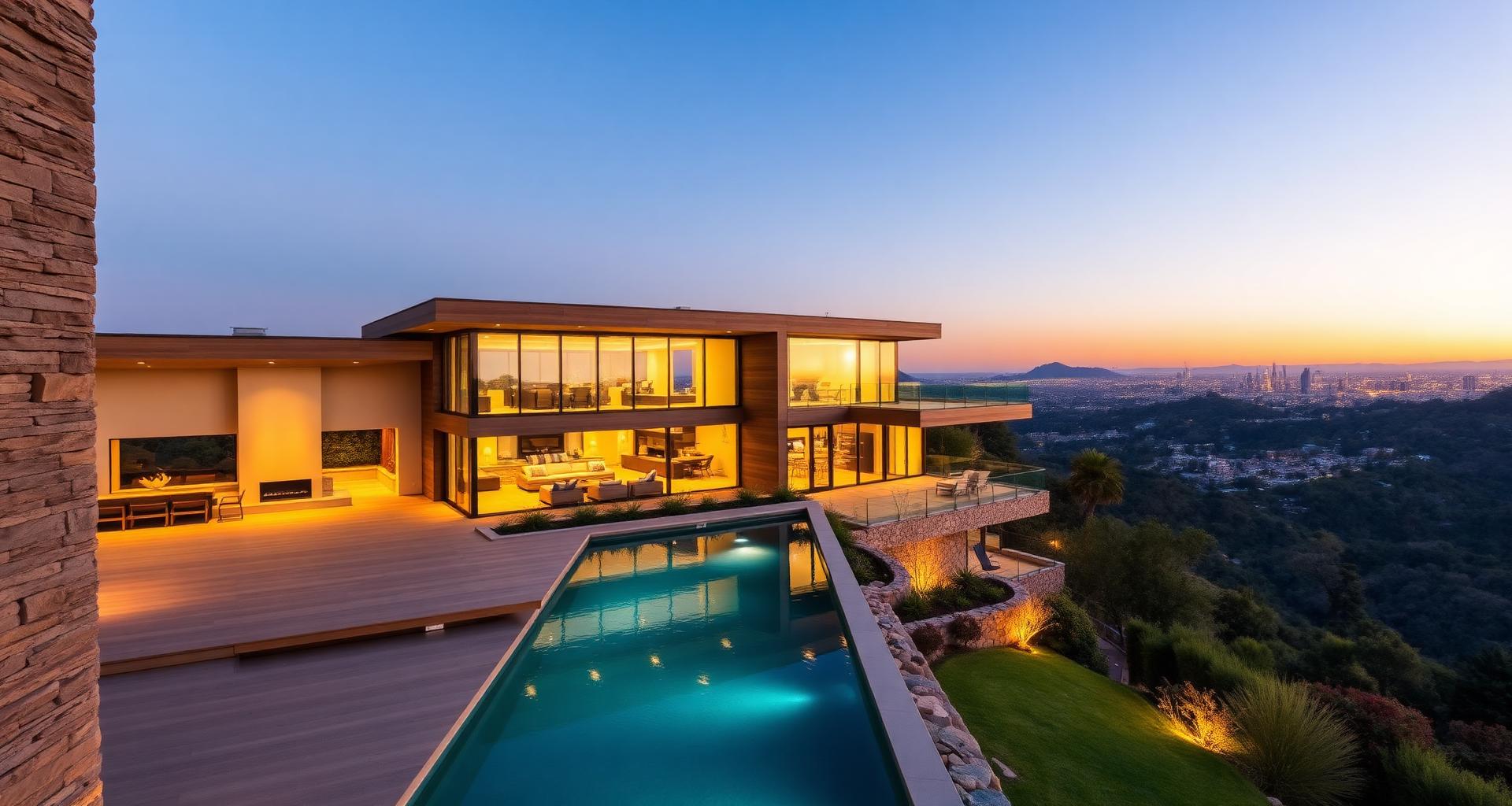
Choosing a luxury design-build firm in Los Angeles comes down to more than reputation. Homeowners should compare firms based on project fit, permitting experience, pricing clarity, craftsmanship, and communication. In high-end residential work, the right team is usually the one with relevant local experience and a disciplined process, not the loudest brand presence.
Direct answer: A luxury design-build firm manages both design and construction under one coordinated process. Compared with hiring an architect and contractor separately, the design-build model can improve budgeting, scheduling, and accountability when the team is experienced and well organized.
That matters in Los Angeles, where hillside rules, coastal review, historic constraints, and agency backlogs can all affect schedule and cost. Regional outlook commentary from the UCLA Anderson Forecast, industry tracking by the California Building Industry Association, and U.S. Census new residential construction data all point to continued complexity in the housing and construction market, especially for premium projects.
Quick checklist for homeowners comparing luxury design-build firms
- Review projects similar to yours in scope, style, and neighborhood.
- Ask how the firm handles budgeting during design, not just after plans are complete.
- Confirm experience with LADBS, Planning, hillside review, Coastal, or HPOZ rules if applicable.
- Request a sample schedule, change-order process, and reporting cadence.
- Verify license, insurance, contract entity, and recent client references.
- Compare at least 3 firms using the same questions and scorecard.
Who are the top luxury design-build firms in Los Angeles?
Direct answer: There is no single best luxury design-build firm for every Los Angeles project. The best choice depends on your home type, neighborhood restrictions, design goals, and how much structure you want during design and construction.
Rather than relying on a generic ranking, most homeowners should build a shortlist of 3 to 5 firms with case studies that closely match their project. A hillside house in the Hollywood Hills may require different experience than a historic renovation, a Brentwood whole-home remodel, a Bel Air custom build, or a coastal project subject to added review.
The strongest shortlist usually includes firms that can show relevant local work, explain how they price during design, and demonstrate how they manage permits, consultants, procurement, and closeout.
What should homeowners look for in a luxury design-build firm?
Direct answer: Strong luxury firms usually stand out through integrated planning, clear documentation, realistic scheduling, and close project oversight. Design quality matters, but process quality is what keeps complex projects on track.
- Integrated delivery: Design, budgeting, engineering, and construction should be coordinated early.
- Preconstruction discipline: Owners should expect scope definition, design-phase estimating, and procurement planning before construction starts.
- Trade quality: High-end work depends on experienced specialty trades in millwork, stone, glazing, steel, waterproofing, and finish carpentry.
- Communication: Look for regular meetings, written updates, decision logs, and project software.
- Documentation: Allowances, contingencies, and change orders should be defined in writing.
- Licensing and insurance: Verify California CSLB status, insurance coverage, and the legal entity named in the contract.
Homeowners should also ask for before-and-after examples that match the home style and neighborhood. Contemporary hillside homes, Spanish revivals, Mediterranean estates, and transitional remodels each carry different structural and finish demands.
Why does local permitting experience matter in Los Angeles?
Direct answer: Permitting in Los Angeles can shape design, schedule, and budget as much as construction itself. Firms with local permitting experience are often better positioned to manage revisions, consultant coordination, and agency review.
Depending on the site, owners may need coordination with the Los Angeles Department of Building and Safety, zoning and planning review, fire-related requirements, hillside regulations, historic review, or the California Coastal Commission. Projects involving additions, ADUs, structural reconfiguration, basements, or custom homes often face layered approval paths rather than one simple permit.
On hillside lots, issues may include grading, drainage, geology, retaining walls, and fire access. In historic or HPOZ-adjacent areas, compatibility review may be required in addition to code compliance. Homeowners should ask who manages plan-check comments, consultant responses, and resubmittals.
How much does a luxury custom home or remodel cost in Los Angeles?
Direct answer: Luxury residential costs in Los Angeles vary widely by scope, site, finish level, and permitting complexity. Per-square-foot figures can offer rough planning context, but they are not reliable substitutes for project-specific estimating.
Broad market discussions often place high-end new construction and major remodels in wide ranges, with costs rising sharply for hillside conditions, custom detailing, structural work, imported materials, and premium systems. Total project budgets can run well above construction alone once architecture, engineering, permitting, surveys, interiors, landscaping, pools, insurance, and contingency are included.
Common cost drivers include labor, cabinetry, stone, glazing, MEP upgrades, structural engineering, grading, waterproofing, low-voltage systems, and temporary housing during construction. Owners should ask for design-phase estimates, written allowances, escalation assumptions, and a defined contingency strategy before finalizing scope.
Which firm strengths matter most by project type?
Direct answer: The right firm profile depends on the type of project you are planning.
- Hillside custom homes: Prioritize grading, drainage, structural, fire-access, and hillside permitting experience.
- Historic or HPOZ renovations: Prioritize documentation, compatibility review experience, and detail-oriented restoration trades.
- Coastal projects: Prioritize entitlement coordination, schedule realism, and experience with layered agency review.
- Whole-home luxury remodels: Prioritize phasing, temporary protection, MEP coordination, and finish-trade management.
- Additions and ADUs: Prioritize zoning fluency, utility coordination, and efficient preconstruction planning.
A comparison framework for luxury design-build firms in Los Angeles
Direct answer: The most effective way to compare firms is with a side-by-side scorecard. Strong firms should be able to answer detailed questions about process, pricing, and prior work.
| Criterion | What to Confirm | Suggested Weight |
|---|---|---|
| Portfolio fit | Relevant work in hillside homes, coastal sites, historic properties, whole-home remodels, additions, or custom estates | 20% |
| Design integration | Clear coordination between architecture, interiors, engineering, and construction | 15% |
| Permitting knowledge | Experience with LADBS, Planning, Fire, Coastal, HPOZ, hillside, or specific-plan review where needed | 20% |
| Pricing clarity | Line-item estimating, defined allowances, contingency structure, and written change-order procedures | 15% |
| Timeline realism | Milestones from feasibility through closeout, including procurement and agency review | 10% |
| Craftsmanship | Trade quality, mockups, QA/QC standards, superintendent oversight, and closeout detail | 10% |
| References and service | Recent client references, warranty support, communication systems, and neighborhood experience | 10% |
Homeowners can score each firm from 1 to 5 in each category, multiply by the suggested weight, and compare total scores. This usually produces a better decision than comparing price alone.
Questions to ask during consultations
- Can you show projects similar to ours in scope, style, and location?
- How do you update pricing during design?
- Who manages permit comments and consultant coordination?
- How are allowances, contingencies, and owner changes documented?
- What reporting cadence should we expect during preconstruction and construction?
- Which materials or systems need early selection because of long lead times?
- What does warranty and post-completion service include?
Warning signs include vague scopes, unrealistic schedules, weak documentation, inconsistent references, and reluctance to explain process.
Frequently asked questions about luxury design-build firms in Los Angeles
Does design-build cost more than hiring an architect and contractor separately?
Direct answer: Not necessarily. Design-build can reduce costly redesign, pricing surprises, and coordination gaps, but value depends on the firm's estimating discipline and process quality.
How many firms should homeowners interview?
Direct answer: Most homeowners should compare 3 to 5 firms. That is usually enough to identify differences in process, pricing transparency, and project fit without slowing the decision unnecessarily.
How long do luxury projects in Los Angeles usually take?
Direct answer: Timelines vary widely based on design complexity, permitting path, procurement, and site conditions. In Los Angeles, agency review and long-lead materials can materially extend schedules, so homeowners should ask for a full timeline from feasibility through closeout.
How to make the final choice
Homeowners usually make better decisions when they compare documentation, planning discipline, and neighborhood-specific experience rather than choosing the lowest bid or the most polished presentation. In Los Angeles, local permitting knowledge and clear project management can be as important as design taste.
If you are building a shortlist, focus on firms that can demonstrate relevant work, explain their budgeting method, and show how they manage complexity from design through closeout.
About our services
New Dawn works with Los Angeles County homeowners on kitchens, bathrooms, additions, ADUs, general contracting, custom carpentry, and broader residential construction. Our approach aligns with the comparison criteria above: clear scope planning, practical budgeting, coordinated execution, and local project experience. More information is available on our services page. Homeowners who want to discuss project fit or next steps can also contact us.
Frequently Asked Questions
Does design-build cost more than hiring an architect and contractor separately?
Not necessarily. Design-build can reduce costly redesign, pricing surprises, and coordination gaps, but value depends on the firm’s estimating discipline and process quality.
How many firms should homeowners interview?
Most homeowners should compare 3 to 5 firms. That is usually enough to identify differences in process, pricing transparency, and project fit without slowing the decision unnecessarily.
How long do luxury projects in Los Angeles usually take?
Timelines vary widely based on design complexity, permitting path, procurement, and site conditions. In Los Angeles, agency review and long-lead materials can materially extend schedules, so homeowners should ask for a full timeline from feasibility through closeout.